History
Bottisham, known in earlier centuries as Bodekysham and Bottlesham, is one of Cambridgeshire's oldest settlements, with evidence of human activity dating back thousands of years. Archaeological finds, including flint tools, Bronze Age burials and Iron Age remains, show that people have lived and farmed here since prehistoric times.
The village developed on slightly higher ground between the chalk hills to the south and the fenlands to the north. During the Roman period, waterways such as Bottisham Lode were created or improved, helping to drain the surrounding fens and making the area more suitable for settlement and agriculture.
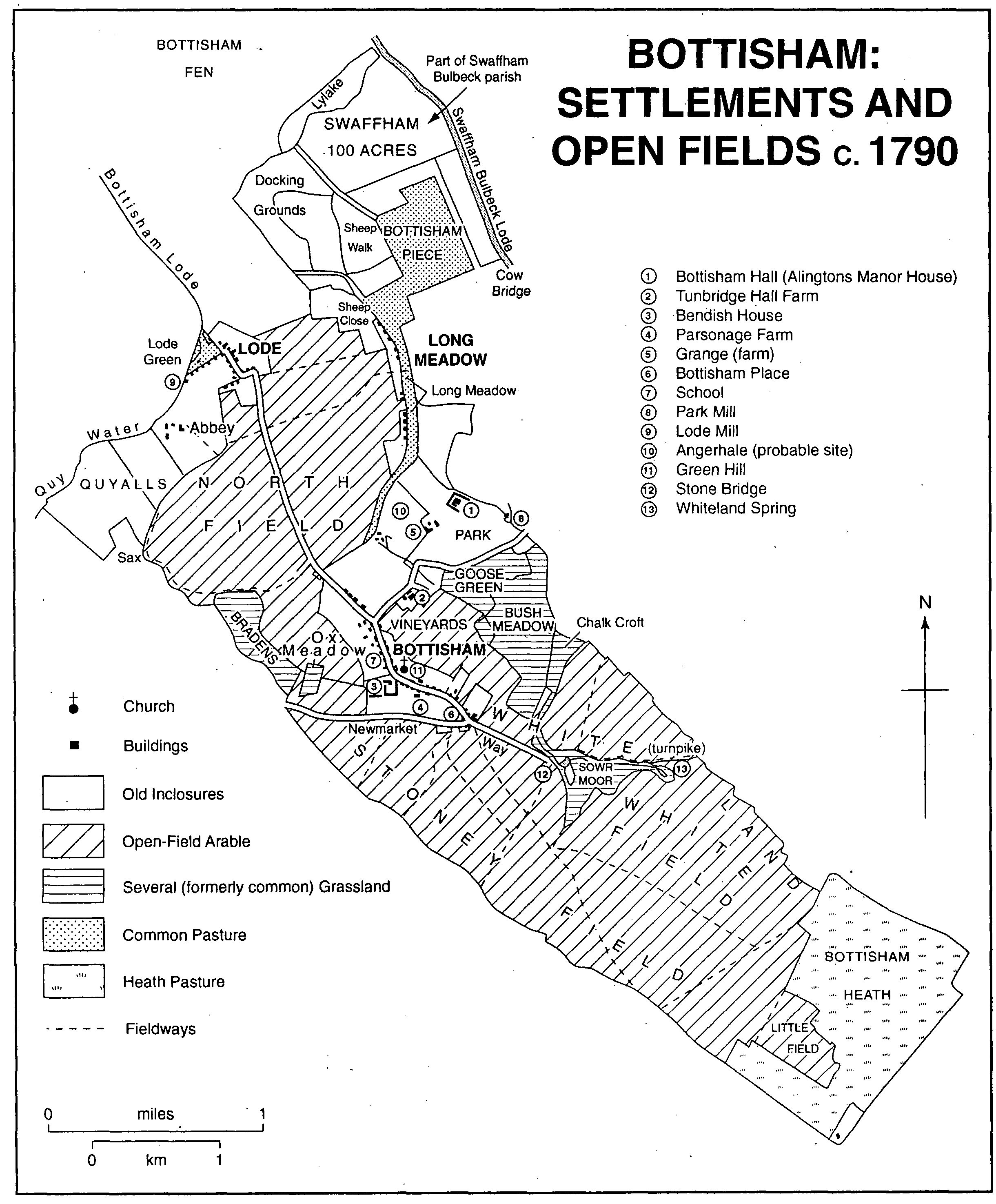
By the time of the Domesday Book in 1086, Bottisham was already a thriving farming community. Throughout the Middle Ages, the parish included not only Bottisham village itself, but also the settlements of Lode and Longmeadow, together with the now-lost hamlet of Angerhale, traces of which can still be found within Bottisham Park.
Bottisham has a long association with nearby Anglesey Abbey. Originally founded by Richard de Clare as a priory of Canons Regular of the Order of St Augustine, the priory stood on an island in the fens known as Anglesey, or Anglesey-in-the-Fens, from which the abbey takes its name. Today, Anglesey Abbey remains one of the area's most treasured historic landmarks. Anglesey Abbey has one of the finest snowdrop collections in the country, with over 500 varieties of these delicate white flowers, many of which are rare. This is why Bottisham Parish Council paid tribute to Anglesey Abbey with the "snowdrop" bench on our Village Triangle.
Agriculture shaped village life for centuries. The open fields surrounding Bottisham were farmed under the traditional medieval system until enclosure in 1802, while the northern fens, once common grazing land, were gradually drained and divided, transforming the landscape into the productive farmland seen today.
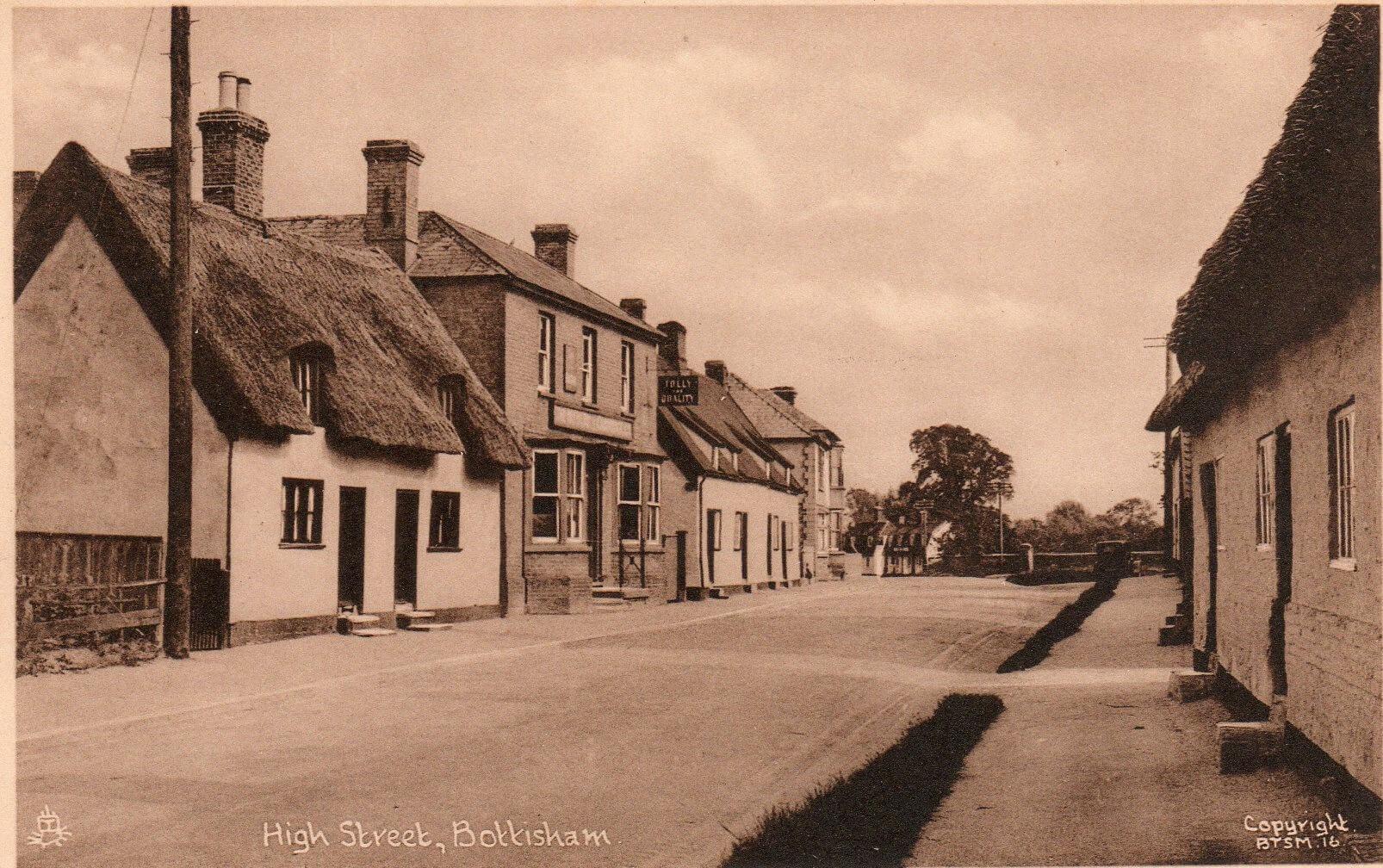
Many of Bottisham's historic buildings date from the 16th and 17th centuries and can still be found along the High Street. At the heart of the village stands Holy Trinity Church, a fine and impressive building whose origins date from the late 12th century. The church was extensively rebuilt during the early 13th century, while in the 14th century the nave was raised and a clerestory added, creating the spacious and lofty interior seen today.
Much of this 14th-century work is attributed to Elias de Beckingham, a native of Bottisham who served as Justice of the Common Pleas during the reign of King Edward I. The church contains several notable monuments, including memorials to Elias de Beckingham, Sir Roger Jenyns and the writer and politician Soame Jenyns. The parish registers date back to 1563, providing a remarkable record of village life over more than four centuries. The Jenyns family left a lasting legacy in the village, reflected today in local names such as Jenyns Close. The Jenyns family still reside at Bottisham Hall today.
Holy Trinity Church remains central to village life and forms part of the Anglesey Group of Parishes, together with the parishes of Lode, Stow-cum-Quy, Swaffham Bulbeck and Swaffham Prior.
The village has experienced many changes over the centuries. Fires in 1712, 1795 and 1846 destroyed a number of homes and led to rebuilding along the High Street. During the nineteenth century, improved roads and the arrival of the railway at nearby Lode brought new opportunities and connections, while village traditions such as annual feasts, flower shows and sporting clubs flourished.
Bottisham played an important role during the Second World War with the establishment of RAF Bottisham in 1940. Bottisham Hall was requisitioned as the officers' mess, while extensive accommodation for nearly 3,000 personnel was constructed, including rows of Nissen huts and supporting facilities such as a church and sickbay. Initially used for RAF operations, the airfield later became home to American fighter squadrons and played a significant role in the Allied war effort.
Following the war, part of the former airfield site became home to the Nicholas Copernicus Grammar School for Boys, which relocated to Bottisham in 1948.
Today, the history of RAF Bottisham is preserved by Bottisham Airfield Museum, which opened in 2009 to commemorate the often-overlooked contribution of the airfield and those who served there during the Second World War. The museum now welcomes visitors throughout the year and includes modern facilities, a café and shop.
The second half of the twentieth century saw considerable growth, with new housing, expanded community facilities and the continuing development of Bottisham Village College as a centre for education, sport and community life. Despite these changes, Bottisham has retained its distinctive character: a historic Cambridgeshire village with deep agricultural roots, a rich heritage and a strong sense of community that continues to thrive today.
As Bottisham moves further into the twenty-first century, carefully planned developments such as Bradens Field and Copse Close represent the latest stage in a history of change stretching back over a thousand years. Alongside new homes, these developments have introduced new public spaces and facilities for residents, ensuring that the village continues to grow while preserving the character and heritage that make Bottisham special.